About Abbey
PhD. Food Scientist. Educator. And yes, I've spent a lot of time thinking about ice cream.
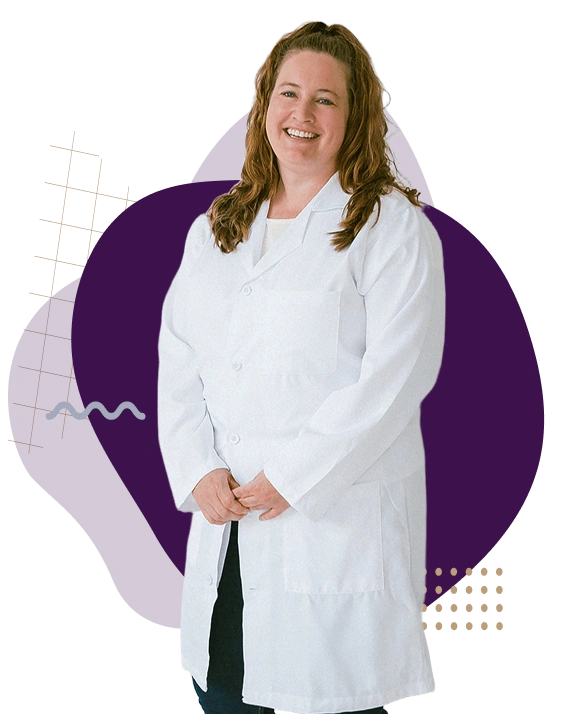
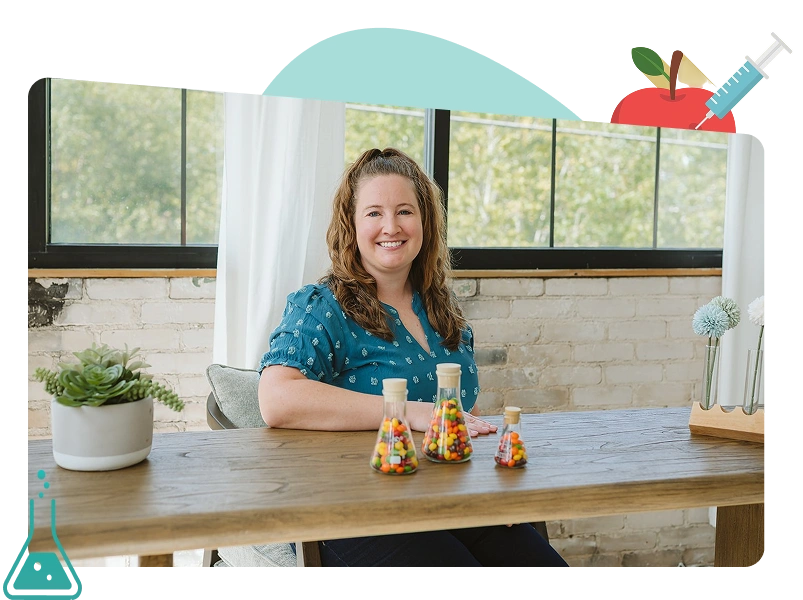
Hi, I'm Dr. Abbey Thiel — and I turned an accidental major into a career spent making food science make sense for everyone.
How It Started
I didn't plan on becoming a food scientist. It found me.
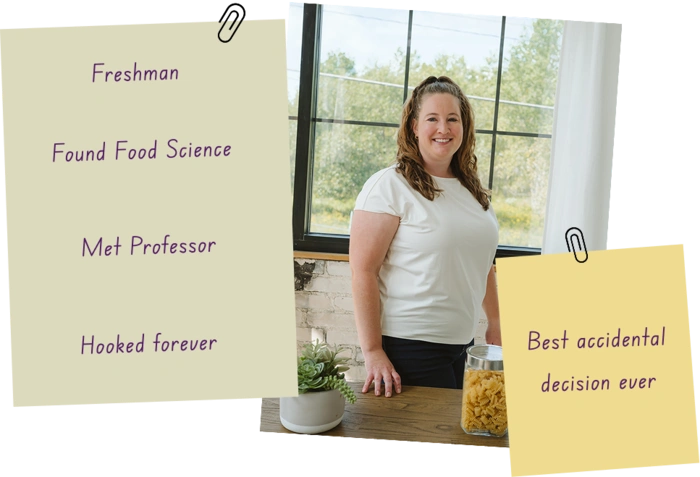
I was a freshman at UW-Madison, scrolling through the university's list of science majors, when I stumbled across Food Science. I had no idea it existed as a field. One meeting with a professor later, I was hooked — and the rest of my academic life fell into place from there.
I went on to earn my BS in Food Science with highest distinction in 2014, then stayed at UW-Madison for my PhD, which I completed in 2020. My dissertation focused on the microstructure of confectionery and frozen dessert systems — think chocolate, caramels, gummies, and ice cream — and how microstructure affects the way food tastes, feels, and behaves. I used tools like rheology, texture analysis, and microscopy to get at answers that aren't visible to the naked eye.
If you think that sounds like a long time to spend studying ice cream, you and my parents would probably get along just.
The Netherlands Chapter
After graduation, I packed my bags and headed to one of the world's best food science institutions.
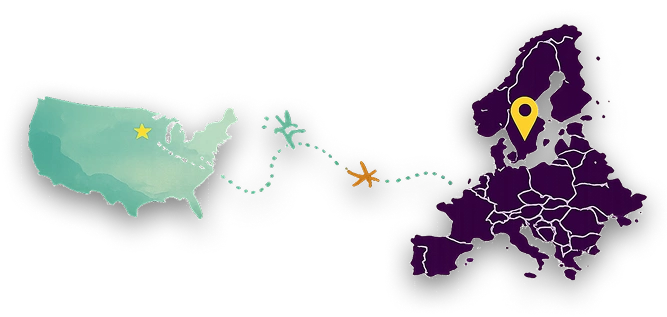
After finishing my PhD, I joined the Food Quality & Design Group at Wageningen University & Research in the Netherlands as a Postdoctoral Fellow. My research there focused on the potential of yeast-made milk proteins to produce dairy alternatives — specifically, how to optimize gelation processes for products like yogurt, gouda, and mozzarella made without animals.
I also partnered with the Amsterdam Human Milk Bank to evaluate alternative pasteurization methods, with the goal of improving the retention of bioactive components in donor human milk. It was some of the most interesting, meaningful work I've done.
I went on to become Project Manager for a €2.5 million research grant focused on developing animal-free milk proteins — leading a cross-functional, global collaboration across academia, industry, and startups. I also taught confectionery science at UW-Madison from 2023 to 2025, including the 2-Week Resident Course in Confectionery Technology, Enhanced Gummies and Jellies, and Candy Basics.
Wageningen is where I grew the most as a scientist, a communicator, and a collaborator.
Today
These days, I do three things: consult, create, and write.
-
Consult
Solving Real
Food Science Problems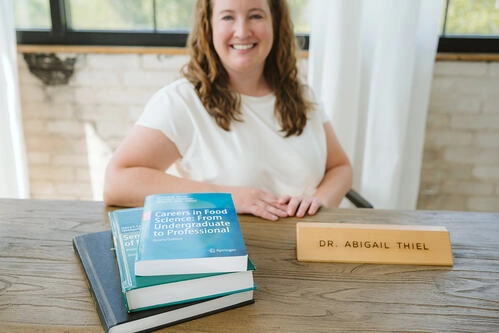
Since 2023, I've worked with food and supplement companies as an independent food science consultant — advising on product formulation, ingredient functionality, and manufacturing scale-up across categories including confections, snacks, and supplements. My clients range from early-stage founders bringing their first product to market, to established companies solving a specific production challenge. If you have a food science problem, I want to help you solve it.
Work With Me -
Content
Making Food Science
Approachable For Everyone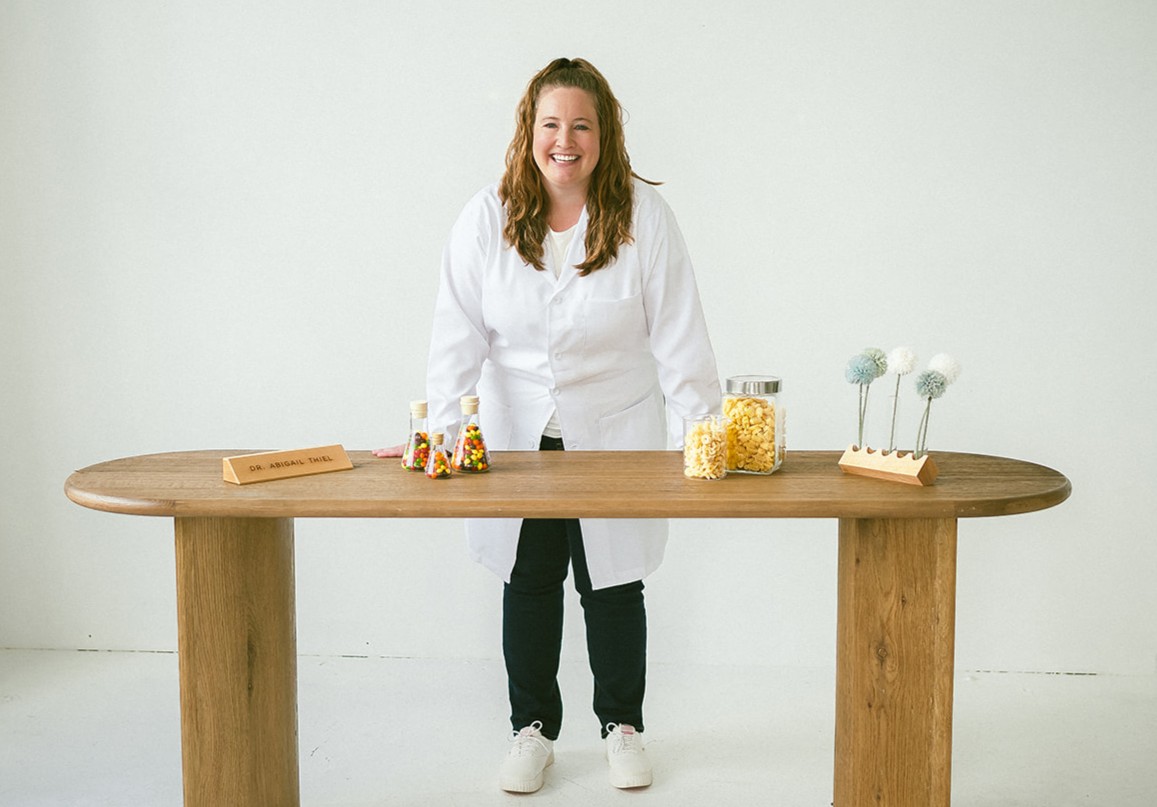
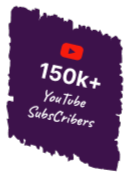
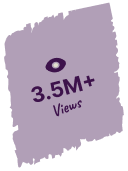
In 2020 — during the early days of the pandemic, in a small apartment with no filming experience — I uploaded my first YouTube video. Six years later, Abbey the Food Scientist has grown to 150,000+ subscribers and 3.5 million views.
Watch On YouTube -
Write
Turning Complex Science
Into Useful Information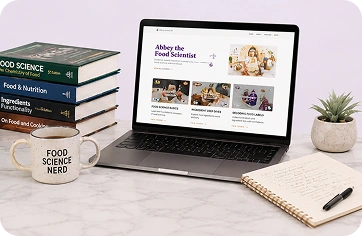
I write over 100 articles a year across my blog, Medium, and industry publications including Food Technology, Quality Assurance & Food Safety Magazine, and Technology Networks. I also created and teach Food Science for Beginners, a 7-hour online course with a companion e-book.
Read The Blog
Areas of Expertise
-
 Confectionery science (chocolate, gummies, caramels, sponge candy, marshmallow)
-
 Frozen desserts (ice cream, gelato)
-
 Dietary supplements & functional foods
-
 Product formulation & reformulation
-
 Manufacturing scale-up & process optimization
-
 Food microstructure & rheology
-
 Science communication & consumer education
Education & Experience
-
2010–2014
B.S. in Food Science, Highest Distinction
University of Wisconsin–Madison

-
2014–2020
Ph.D. in Food Science
University of Wisconsin–Madison
Specialized in confectionery and frozen dessert systems. Dissertation: microstructural studies on chocolate, caramels, gummies, and ice cream.
-
2021–2023
Postdoctoral Fellow
Wageningen University & Research
Research on yeast-made milk proteins for dairy alternatives; collaboration with the Amsterdam Human Milk Bank on pasteurization methods.
-
2022–2025
Project Manager, Food Quality & Design Group
Wageningen University
Led a €2.5 million grant on animal-free milk proteins across global academic and industry teams.
-
2023–2025
Confectionery Course Instructor
Taught the 2-Week Resident Course in Confectionery Technology, Enhanced Gummies and Jellies, and Candy Basics.

-
2023–Present
Food Science Consultant
Independent
Advising food and supplement companies on formulation, ingredient sourcing, and manufacturing scale-up.
In The Press & On The Mic
Food science, explained — in places where real people actually read and listen.
I believe that good science deserves a wider audience. Over the years I've been lucky enough to share food science with readers and listeners across some of the world's most-read publications and media outlets.
Media Features









Podcasts
- Omnivore (IFT's official podcast)
- Prepared Foods Podcast
- Food Industry Insider
- My Food Job Rocks!
- America's Nest Egg
- The Drip by AQUALAB
- Real Talk Food Safety
- Science, Microbes, and Health
- Barking Mad
- Whimsical Wavelengths
TV
- The Nature of Things
Publications
- Food Technology
- Technology Networks
- Medium
- abbeythefoodscientist.com
- Quality Assurance & Food Safety Magazine
I've Written What I Know.
From academic publishing to kids' activity books, my writing covers the full range of food science communication. Because not everyone learns the same way — and not everyone who's curious about food has a PhD.
Browse My Books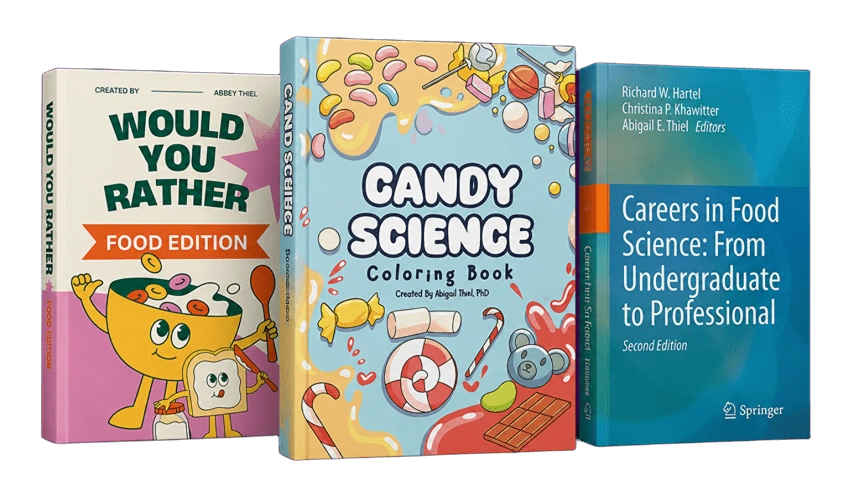
Beyond The Lab
A few other things worth knowing.
I grew up in Wisconsin, which probably explains why so much of my research has involved dairy. I'm the proud aunt of nieces and nephews who inform me regularly that I have "poop hair" — a review I've chosen to take in stride.
When I'm not consulting or making videos, I'm probably thinking about the food system, reading something dense about emulsions, or trying to figure out why my experiments went sideways. Food science never really turns off for me. I don't think I'd want it to.